
We (sadly) live in a time where graphical prowess occupies a big part
of the gaming community's mind, like if it was the be all and end all
of videogame discussions, like an absolute argument that will trump
everything else, because as we know, the videogame medium is a
constant competition and companies must race against each other
in order to prove who puts more money on graphical showcases.
But the truth is, that once you move your sight away from the internet and
its hiperbolic and sometimes even brainless way of thinking and react,
and you look all across the history of this medium, the most successful
console more often than not is not the most powerful; and that's
simply because there are many other factors to take into account.
I mean, don't take my word for it, take a look yourselves.
Wii was a bigger success than the PS3 and Xbox 360, PS2 sold more than the Gamecube and Xbox
of videogame discussions, like an absolute argument that will trump
everything else, because as we know, the videogame medium is a
constant competition and companies must race against each other
in order to prove who puts more money on graphical showcases.
But the truth is, that once you move your sight away from the internet and
its hiperbolic and sometimes even brainless way of thinking and react,
and you look all across the history of this medium, the most successful
console more often than not is not the most powerful; and that's
simply because there are many other factors to take into account.
I mean, don't take my word for it, take a look yourselves.
Wii was a bigger success than the PS3 and Xbox 360, PS2 sold more than the Gamecube and Xbox
NDS left was doing circles around the PSP, while the NES was always above the Master System.
Success is not an exact formula that you can follow, nor is the power of a system
the most important ingredient; and there is no better exampe of a machine that,
not only would triumph despite its technical inferiority, but it would also dominate
the competition in a way that we will probably never see again in the life of this industry.
I'm of course, talking about that brick.
That green-screen-machine that we call the Game Boy.
Success is not an exact formula that you can follow, nor is the power of a system
the most important ingredient; and there is no better exampe of a machine that,
not only would triumph despite its technical inferiority, but it would also dominate
the competition in a way that we will probably never see again in the life of this industry.
I'm of course, talking about that brick.
That green-screen-machine that we call the Game Boy.

Game Boy was created thanks, at least in part, to Gunpei Yokoi. This man is nowadays known for producing games like Metroid or Kid Icarus alongside the studio R&D1, but his input in hardware matters was also important.
In fact we owe Gunpei a lot of kudos for things like the Game & Watch, those little electronic toys with LCD screens that would contain simple games that became the first product of Nintendo to find great success. He also helped to green-light the arcade game Donkey Kong, as he was the one to make Yamauchi (the president of the company back then) pay attention to a young Shigeru Miyamoto's ideas. I probably don't need to say how big Donkey Kong ended up being (but I just did).
He also proposed the idea of making Mario Bros a multiplayer game (precisely the most interesting part of it), maybe even causing indirectly the creation of Luigi.
Gunpei, alongside Masayuki Uemura renewed the old toy guns the company had before entering in the videogame medium to make the Zapper, capable to work with TVs of that time (instead of using bulb lights and pointing to a wall).
 |
| That's the original Duck Hunt. Technologically simple, but very ingenious. |
But beyond that, Gunpei was ho created the D-Pad, existential part of many controller used for decades, even for non-gaming related controlles. He was a man with a very special sense to use old technology, spin it, and use it to create something new and interesting. Gunpei called this process "Lateral Thinking with Withered Technology", coining that term in a book he wrote talking about all these things named "Yokoi Gunpei Game House".
This "philosophy" would become a big part of Nintendo's seasoned history. Satoru Iwata, who would become the president of the Company much later, would take this line of thought very seriously, which would in turn help to create the Nintendo DS and Nintendo Wii. And hell, we're in 2018, we have the Nintendo Switch with it's different ways to be played, and the even crazier Nintendo Labo experiment. It's really interesting stuff if you ask me.
This is freaking amazing, I can't wait how this stuff evolves.
Even more, Mr. Yokoi had quite the knack for creating toys that Nintendo would later sell too.
...But what if I told you that all this you just read wasn't the entire or totally true story?
Because, as of this very year, 2019, we've discovered that the Game boy has more people to thank for its creation as we know it than we thought, and some hold more importance than Yokoi himself!
You see, a french writer by the name of Florent Gorges did recently release a book named "L'Historie de Nintendo: 1989-1999, l'incroyable historie de la Game Boy" which translates into "The History of Nintendo: 1989-1999, the incredible story of the Game Boy". As far as I can see it hasn't been translated into English yet, but I wish it was (at least we now know that the book of Shigesato Itoi "Iwata-San" is at least going to be translated, which is fantastic news!).
In this book the writer makes the surprising (even to himself) discovery that Gunpei Yokoi wasn't the leading man of the Game Boy's development, and in fact, Gunpei's idea was completely different and was rather opposed to what this portable machine would end up being!
Seeing how the book is recent, I'm not going to spoil all, but just to make justice to the people involved with the development, I'll give you this small summary:
Gunpei Yokoi wanted the Game Boy to be more or less a direct continuation of the Game & Watch, meaning, mostly a toy, no interchangeable games, no importance seen in third party software, and just being a "small thing" that would only last a short time as a business.
On the other hand, his assistant director, named Satoru Okada, was always arguing against Yokoi's vision, to the point of dividing the development group R&D1 into two groups. His opposition was so strong that one day during a meeting, Yokoi had enough, and tiredly told Okada that he won, he could do whatever he wanted. Okada was given full responsibility of the project and it changed entirely to a new route.
Hirokazu Tanaka, another worker of Nintendo during that time, affirms that the Game Boy was mostly Okada's vision, even going so far as commenting that Okada the one with the idea of the Link Cable, and how Mr. Yokoi didn't want to make a "portable Famicom/NES" initially, which is what the GB would be more or less, and what Okada wished to achieve.
We still don't have all the details, but man, what a twist on this story. Satoru Okada deserves the recognition if he truly was spearheading the project and were his ideas the ones that made the Game Boy what it was, because if what we know about Yokoi's vision ended being materialized, Nintendo's entire history of handheld gaming would be completely different, or who knows, maybe there'd be no history to talk about.
In any case, the quest for a new system had a new vision, create a portable machine hat wasn't chained to a single game, just like R&D2 development team's Famicom/NES, it would be a machine with interchangeable cartridges. It would be pointed towards a young public, but without losing the possibility to interest older people thanks to the portability.
Unlike home consoles, when designing a portable device you need to have certain things in mind, things that only someone with experience would see coming, and as you will see later in this entry, the competition of this newly thought device dind't have the right mindset.
Game Boy used a processor named ZiLOG Z80 (8 Bits), used in old computers from the 70s and very early 80s. It was kinda old for the time, and of course way less powerful than the computers and 16-Bit systems that were getting ready to be released (Just to give you an idea, that Z80 chip is what the Mega Drive would use only for the sound!).
Its screen was the most basic thing you could find. Capable of showing four shades of "color" and small sprites moving, and it had a very distinctive green color similar of that you could find in certain crystal bottles (I don't know in other places, but here in Spain is was pretty common to see in wine bottles). And beyond all that, it also had motion blur when game's screen scrolled around.
Its capabilities were a bit lower than the NES, and it had a modest speaker, with the option to use earphones. Its size was quite bigger than the Game & Watch, and it was quite blunt and simple in its design. I mean, it was called The Brick for something.
 | |
| This GB was bombarded in the Gulf War. While it ended looking uglier than a Square Enix port to IOS, the thing still works and its shown in a museum! |
Thing is, though, all those "cons" brought gigantic "pros" to the table.
The oldie Z80 processor, if true that it wasn't all that special in 1989, was a piece very well known had a lot of use and got a lot of documentation, making the creation of software not only faster, but it also meant that developers didn't need to learn much new stuff, and creating games would be also more simple and cheaper.
The simplicity of its visuals and the screen worked in the way of making scratches less important, and because of the simplistic architecture of the machine, the battery would be able to last long periods of time, not to mention that would need less batteries to work.
Because of its already pointed out big size and blunt design, the device was "blessed" with very high durability and resistance; with a hard plastic that could survive to the most despicable kid you could find, to falls of several floors (this one seen with my own eyes!), revive after being put in water, and literally, resist bombs. This thing was made for the single purpose of entertaining, and no one or anything will get between it and its mission, dammit.
 |
| I'LL BE BACK. |
And those less than stellar technical aspects that made the Game Boy inferior to the soon-to-be competition were precisely the things that, ironically, let the system become the winner. You see, on paper, the other portable gaming devices of the time were "so much better" that would run circles around the brick. But that's not how it was going to end.
Let's take a look to the competition of the Game Boy very quickly:

Buuut... Its terrible size made it not very ergonomic, its battery issues were big, needing 6 AA batteries for around 4 hours of game time, a price of 180 US Dollars, and the biggest problem of all, the lack of games (and the ones it had were mostly ports with not much being originally made for it) ended up making this system rather uninteresting for the public, selling just 3.5 millions. The list of cancelled games is around a third the number of games released on this device... Auch.

Game Gear appeared in 1990, and was, in few words, a portable Master System, slightly improved, and it could even play MS games with an adapter. It had a color screen with light, and it was bigger than the Lynx's. On paper was pretty neat, more powerful than a NES on your pocket.
Buuut.... Although while not as big as the Lynx, this system hardly could be name portable, just like Atari's machine. The screen, while on paper sounding great, was seen as bad and was rather criticized. It also used 6 AA batteries for slightly less gaming time than the Atari, between 3 and 4 hours. It had a big marketing campaign initially, but in the end Sega left the system unattended to focus on the Mega Drive, and with a price of 150 US Dollars, and a library of games seen as "not having much quality" by people of that time (I don't quite get this reaction myself but that's what several information places point out), the fact that the accessories would get in the way of each other (for example, you couldn't use the Battery Pack if you wanted to use the Master System Adapter, and the Battery Pack was kinda flimsy) made the interest in the machine shrunk quite a bit. It ended selling 10.62 million units, and it could have done much better if Sega had put the care in it.

Buuut... I... I don't even know where to begin with this device. Because NEC used poor and cheap capacitors, the sound was bad, even in newly produced units, not to mention that made each of these devices die at some point. It had a high chance of dead pixels, even before being used for the first time. Because it used home console games, the text could be rendered unreadable depending on the game. It lacked memory to save games, so any game designed to be able to continue your playthrough through several sessions was out of the window, and just like the other two, it used 6 AA batteries, and had the worst use for them as you would be lucky if it lasted 3 hours. Not only that, the light on the screen was pointed to be poor.
And the last laugh... It was priced as 250 US Dollars. Then it rose to 300. Then when back to 250 again, and it was reduced to 200. It was lucky to sell more than a million units.
And then we have the Game Boy. Simple graphics. Simple technical capabilities. No luxury, no bells and whistles.
But was resistant, with an acceptable size, with a battery life that, at minimum lasted three times more than the competition (around 12 to 14 hours, although I read in some places it could last even more, but I can't confirm that), making it way more portable. And of course, a massive library of games in comparison to those other systems, between ports of already existing games, and new and original titles created specifically for the system, weaknesses of the TurboExpress and the Atari Lynx.
The primitive brick not only shrugged its shoulders with each new "rival" released to the market, but it also outlived every single one of them by many years. Quite impressive for a device that wasn't even respected by some of Nintendo's own workers, calling it the "Lame Boy" becaus they thought it would be a huge flop. I really want to see their reactions of the opposite happening, they must have been fun.
Looking at the numbers, if NES was a triumph, Game Boy was, simply put, something else. With a total of 118 million units sold, it was something that had never seen before, and it would take many years to see again. When this system landed on American ground with a stock of a million units, it only took a few weeks to be sold entirely.
Funny enough, even when it has "Game Boy" for a name, it ended being a device for everybody. Some studies pointed out that 46% of the users of Game Boy were women, and it was popular equally between young audiences as it was for for older consumers too, because the library offered a huge variety of experiences, and had something for very different type of people.
Of course, that success was in part by big hitters such as Super Mario Land and Tetris, which were launch titles. The first one specially interesting, as it showed that you could have home console experiences on your pocket and working well if you had in mind the limitations and worked around them (instead of porting things verbatim and calling it a day, like some developers did). The second, though, was a simple yet addictive experience that combined with the "play anywhere" mindset wonderfully, specially adults.
 |
| It stole our hearts, and money too... |
But that does not mean it didn't have any revisions, of course. It took some time for them to happen, but it once started, it became a very common thing for Nintendo to do with handled devices.
In 1996 (7 years after the original), a new model would be put in stores, named Game Boy Pocket.
GB Pocket was lighter, thinner, it came in different colors and it only used 2 AA batteries with a duration of around 10 hours, which is a great consumption upgrade. But the most important change was the screen, it was much, much better. Instead of the classic green, it was plain "black and white", was way more clean and clear, making this revision much more desirable... Except because a couple of years later, Game Boy Light would become a thing.
Game Boy Light is very similar to Pocket. A bit thinner and slightly taller, but the real difference was the added back light capability to the screen. And the Battery Life became longer too, this time lasting around 20 hours without light, and 12 with it, using the same 2 AA batteries. It was the best model of the original Game Boy that existed, although sadly it never left Japan, and that's because...
In that very year, 1998, another Game Boy appeared; this time with a far more important surname: Color.
It turned out that third parties where pushing Nintendo to create a more powerful portable machine that also added a colored screen. Game Boy Color was the result of that push, and the reason why both Light and Color released in the same year.
While previous revisions improved the overall design of the machine, GBC would improve it technically. Its more robust, having 8MHZ instead of 4, three times the memory, a superior non-blurry screen (although sadly, not illuminated), and of course, games for this revision now would be colorized. And if you put an original GB game, you could choose a few palettes to colorize those too.
This caused to be "GBC Only" games, that used the colorization to its fullest, in addition to the improvement in power. This device also had an advance mode where it could show up to 2.000 colors on screen, although few games used it, like The Fish Files or Alone in the Dark: The New Nightmare.
 |
| I had the green one, also known as the best color! |
Not only that, there were special original Game Boy games that had unique palettes when played on a GBC, like Kirby games, the Super Mario land games (including Wario Land), Tetris, or Pokémon Yellow. Thanks to GBC the library expanded quite a bit, and one rather big difference that I notice between original GB and GBC games is that the latter ones actually bumped the framerate to 60, instead of seeing the vast majority of GB games being 30 frames.
And talking about games, one would expect to find at the very least least a few of them being fun today. I mean, the system was alive for 13 long years, right?
Well, of course the answer is yes. But the early moments of the system where a bit slow. Initially, the GB library was inundated by Puzzle games ported from other places, often times rather poorly. People wanted into this new hot system and get their piece of cake, and some made the jump kinda rushing it. Between lackluster ports of course there were neat games, and as time went on better and better games started to appear, many of them sadly not receiving the attention they deserve... Or not getting the respect they deserve nowadays, it's kinda surprising (and disgusting if you ask me) we're on 2018 and people still look like there was nothing worth to play besides Pokémon.
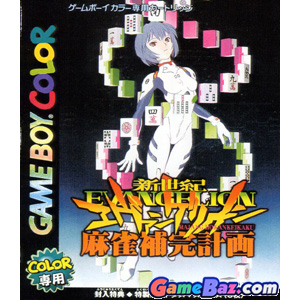
And by the way, you don't even know how lucky you (and I) are to be probably outside Japan, regarding GB games. Its incredible the amount of pure shovelware mountains that got released there in the form of Pachinko simulators, hundreds (yes) of Mahjong games, including licensed stuff like Neon Genesis Evangelion Mahjong, and stuff like Horse Race simulators which have always been rather popular there, and GB got more than one could wish. Fortunately, you only need to deal with that type of stuff whenever you try to find cool games left in Japan.
Developing games on the GB being cheap and fast was good on one side, but that's the other side of the coin, sadly. Thankfully outside Japan we didn't know anything of this, although the truth is that shovelware exists pretty much everywhere you look (although its easier to notice in super selling systems like the PS2 or Wii).
 |
| And these are just a few for Original GB and just between A and M! Oh, Mole Mania, how much I love ya... |
But going back to the good stuff, GB as of today can offer still a great number of games, starting with a slew of Puzzle games (that Z80 processor was the perfect excuse to port PC puzzle games onto the GB, you see), but also getting great support from Nintendo and other companies like your usual Konami, Squaresoft or Capcom. Genres like Adventure, Platformer or even RPG would end up on GB (and having portable RPGs in early 90s was quite mind blowing).
While visually the GB will always be quite simple-looking, something that I think still holds up pretty well is the music the system could create. While is true that technically speaking the GB was more modest than the NES, that doesn't mean good composers and sound designers could get great sounding stuff into it. Either by more know people like Nintendo, Konami, Capcom or Sunsoft, or less renowned developers, GB has a lot to show soundwise, to the point that some GB versions of multiplatform games sounded better on The Brick, like Dr. Mario or Bonk's Adventure.
And I guess I already talked enough about this little thing. Needless to say that the Game Boy was a gigantic step on the right direction as far as portable gaming goes, and also to show that power doesn't really translate into success, as there are many things to consider and think about.
Much later, other portable gaming devices would appear, like the Wonder Swan (which was designed by Gunpei Yokoi himself, maybe learning from what happened with the GB's creation!) or the Neo Geo Pocket, although by that point the planet was Game Boy World, but I will say they are miles more interesting that the early competition, unlike the Atari Lynx or TurboExpress, and probably end up talking about their games too, as they have quite a few to point out.
Game Boy is still quite well known an liked. Beyond Pokémon, that come to invade us and never leave, the handheld still has lots of games to offer, and is quite emblematic all by itself, not only for how memorable the design is, but also for its importance in video game history. We could even say that the utter success of the system is what let Nintendo reign "The Land of Handheld Gaming".
But in any case, that all for this entry. It was the story of the little Brick that could. And now that we know it, also the story of Satoru Okada, of course! It's going to take some time to let the dust settle with that new information, because it radically changes what we thought about the console's origins.
I mean, the belief of "Gunpei Yokoi is the father of the Game Boy" is now completely false. Not that it was ever completely true either, even if one person has the vision, it takes a full team of talented people working hard to make something happen, but... Wow, how things change.
Now, I guess I'll go away, there's Mole Mania to play.

No comments:
Post a Comment